Find Nonprofits
Eagles Nest of Saint Clair County/The Joseph Center
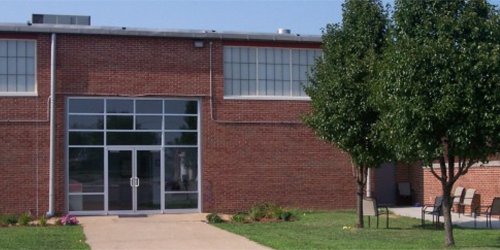
The Joseph Center is a 26 bed transitional housing program for homeless veterans dealing with substance abuse addiction. Our mission is to assist these veterans in becoming self-sufficient and moving into permanent housing.
East St Louis, Illinois
AIDS LEGAL REFERRAL PANEL OF THE SAN FRANCISCO BAY AREA
ALRP provides free and low-cost legal services to people living with HIV/AIDS in the San Francisco Bay Area.
San Francisco, California
Long Way Home
Long Way Home's mission as a registered US 501(c)3 is to use sustainable design and materials to construct self-sufficient schools that promote education, employment and environmental stewardship. Our vision is to empower communities to break the cycle of poverty through innovative solutions to local challenges.
Chimaltenango
Resurrection Street Ministry
Resurrection Street Ministry offers food boxes at our multi-program facility. We provide nutritional food boxes of fresh produce, bread products and, when available, deli items, prepared meals, dairy, meat, non-perishables and snack items.
Mesa, ArizonaTen Thousand Villages-Fort Collins
Making a difference in communities through dedicated service and impact.


Ambient Youthful Peacemakers Foundation
Ambient Youthful Peacemakers Foundation – is a non-profit, non-governmental charitable organization, which is registered in the Netherlands, center of Justice. Our organization aims to manifest the meaning of peace to people.
Amsterdam, Noord-holland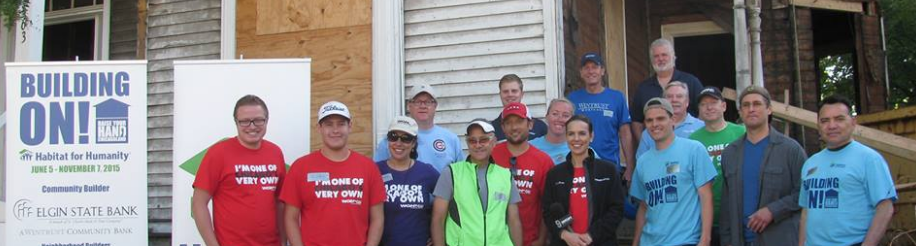
Habitat for Humanity of Northern Fox Valley
Seeking to put God's love into action, Habitat for Humanity brings people together to build homes, community, and hope.
Elgin, Illinois
Blue Planet Network
Blue Planet Network, a program of Thrive Networks, connects funders, NGOs, the public and communities in need to improve the planning, selection, management and monitoring of water and sanitation programs. This leads to more lasting impact at lower costs.
Redwood City, California
Big Brothers Big Sisters of Racine and Kenosha Counties, Inc.
Thank you for your interest in Big Brothers Big Sisters of Racine and Kenosha Counties, Inc. At Big Brothers Big Sisters (BBBS), we are grateful for the generosity of our volunteers and mentors alike. Our goals are to match more than 100 children with dedicated volunteer mentors, to increase the communities awareness of our services, and to build partnerships with community organizations and businesses alike. Big Brothers Big Sisters of Racine and Kenosha Counties is dedicated to establishing successful community-based mentoring relationships for youth in need, which help build brighter futures, better schools and stronger communities for all. We are actively recruiting volunteer mentors-men, women and couples-to be matched with one of the 70 children on our waiting list. If you have room in your heart and time in your schedule, please complete the attached application, and contact Mandy Johnson, Enrollment and Match Support Coordinator, at 262.637.7625 or mandy.johnson@beabignow.org. If you are in search of general volunteer opportunities please complete the general application and we will reach out to you as opportunities arise.
Racine, Wisconsin
iCast International Center for Appropriate & Sustainable Technology
ICASTTM (International Center for Appropriate and Sustainable Technology) is a 501(c)(3) nonprofit organization. We develop and implement market-based solutions for issues that plague undeserved communities. Our projects promote sustainable community development by creating social enterprises in the clean energy and resource utilization space.
Lakewood, Colorado
Ten Thousand Villages Hagerstown
Making a difference in communities through dedicated service and impact.
Hagerstown, Maryland
GUTTMACHER INSTITUTE INC
Now in its fifth decade, the Guttmacher Institute remains committed to the mission and goals that led to its creation. The Guttmacher Institute was founded in 1968 as the Center for Family Planning Program Development. At the time, Presidents John F. Kennedy, Lyndon Johnson and Richard Nixon had begun to call the public's attention to the problem of unplanned and unwanted childbearing and its consequences for individual women and men, their children and their communities both at home and abroad. Concurrently, the United States Congress was taking its first steps toward the development of an international population assistance program, as well as a multifaceted, national program aimed at providing equitable access to modern methods of birth control in the United States. By integrating nonpartisan social science research, policy analysis and public education, the Center hoped to provide a factual basis for the development of sound governmental policies and for public consideration of the sensitive issues involved in the promotion of reproductive health and rights. This purpose and commitment continue today. The Center was originally housed within the corporate structure of Planned Parenthood Federation of America (PPFA). Its program, however, was independently developed and overseen by a National Advisory Council separate from the PPFA Board of Directors. Its early development was nurtured by Alan F. Guttmacher, an eminent obstetrician-gynecologist, teacher and writer who was PPFA's president for more than a decade until his death in 1974. The Center was renamed in Dr. Guttmacher's memory, and the Guttmacher Institute incorporated as an entirely independent nonprofit policy research institute with its own Board in 1977. The Guttmacher Institute maintains offices in New York and Washington. Its current staff of 81 comprises demographers, social scientists, public policy analysts, editors, writers, communications specialists, and financial and technical personnel. A few of its employees have been with the organization for most of its existence, and an affiliation that goes back 10 or 15 years is not unusual. The Institute's work is guided by a 39-member board made up of eminent professionals from a rich variety of disciplines, as well as civic leaders from across the United States and around the world. The Guttmacher Institute's annual budget of approximately $17 million is derived largely from private foundations, government agencies, multilateral organizations and individual contributions.
New York, New York